

Marijuana/Cannabis
Marijuana: Research, Information, Education & Prevention
Welcome to the Marijuana Information page, provided by the SAFE Office at Frostburg State University. With the legalization of cannabis in Maryland and other states, it is important to stay informed about the changing social and legal environment. This page offers valuable information on the effects of marijuana, Maryland laws, FSU policies and practices, and resources for those seeking more information or support. Our goal is to provide a comprehensive guide to help you make informed decisions about marijuana use.
Research
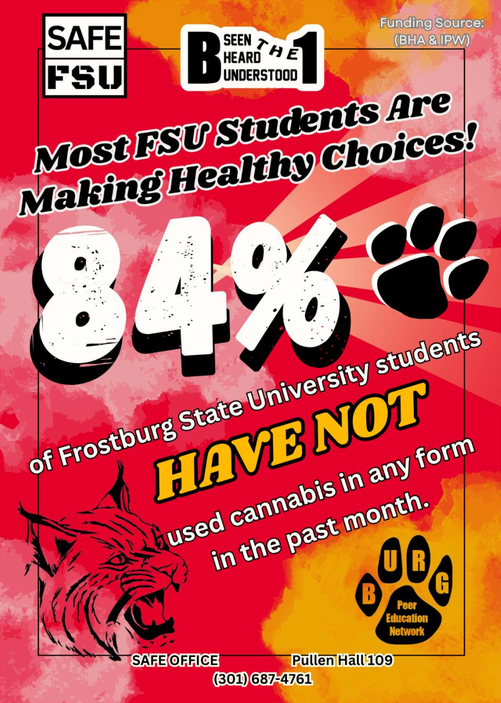
According to the Maryland College Survey*, a significant majority of FSU students (84%) reported not using cannabis in the past month. The FSU MD-CAS 2026 Survey, conducted among Frostburg State University students, found that 24% of respondents reported using cannabis in the past year. Among those who reported using cannabis, smoking was the preferred method of consumption; with 71% of all users saying they regularly smoke, followed by edibles at 64%, and vaping at 61%. However, it is important to note that college students tend to overestimate the prevalence of alcohol and drug use on campus.
For students who choose to use marijuana, please consider the following facts:
- Impaired driving crashes have increased significantly in other states who have legalized marijuana.
- It’s illegal to take marijuana products out of the state.
- Outdoor recreational facilities have the legal right to impose fines on students who may be in violation of their business policy regarding marijuana.
- Marijuana is not cheap. The national average price of marijuana per ounce is $318.72. District of Columbia being the most expensive (Statista, Average price per ounce of high-quality marijuana as of 2025, by select U.S. state (in U.S. dollars), January 2025).
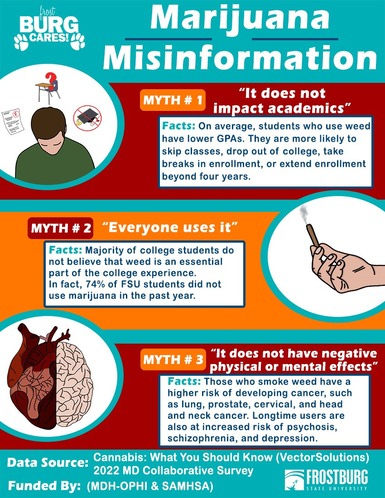
- Maryland College Survey found a statistically significant association between using cannabis in academic contexts and lower GPA/skipping class.
- Marijuana is associated with gun violence, homicide and reckless endangerment more than any other illicit drug.

Legal Matters/Policies
At Frostburg State University, it is prohibited for anyone (regardless of age) to possess or use marijuana on campus in any form, even with a prescription. The university is required to comply with the Drug-Free Schools and Communities Act of 1989, which mandates that each institution distribute written standards of conduct to all students and employees annually. These standards must clearly prohibit the unlawful possession, use, or distribution of illicit drugs and alcohol on school property or as part of any school activities for employees (Policy) or students (Code of Conduct). Violating the FSU drug policy by being under the influence of marijuana will result in student conduct sanctions and processes. Moreover, using marijuana in any form, such as smoking, eating, or vaping, is not allowed in public places on campus. It is worth noting that smoking and vaping are also in violation of the university's smoke-free campus policy.
Community Standards Policy Statements
FSU Noxious Odor Policy (pg. 10).
Recreational Cannabis Use and Possession in Maryland

Academics
Published research consistently shows that the more frequently a college student uses cannabis, the lower their GPA tends to be, effecting class attendance, retention and graduation.
Prevention Initiatives at Frostburg State
Frostburg State University is committed to maintaining a safe and inclusive living, learning, and working environment for all members of our University community to enjoy. To ensure that our values of personal responsibility, diversity, and civility are promoted, the University provides a wide array of prevention programs and trainings to our students and employees.
Cannabis: What You Should Know
In light of Maryland’s HB 837 (Legalization of Cannabis) and part of our comprehensive marijuana prevention program, Frostburg State University expects each new full-time, degree-seeking student, including full-time transfer students with 30 academic credits or fewer, regardless of their personal views or experiences with cannabis, to complete this 22 minute program offering information to help students make informed decisions about cannabis, how to know when someone’s use has become problematic, and how to help a friend who may have a problem with their cannabis use while highlighting important campus resources. Invitations and reminders will be sent to student email accounts and through course announcements on the Canvas course page for the Bobcat Wellness 101 program.
Any interested faculty or staff member also has access to previewing the online cannabis module by requesting access directly by contacting our office.
- Visit Frostburg State University Homepage
- Click Logins and choose Canvas
- Sign In - Using your FSU credentials, continue to sign in to view your courses
- Note: All first-year and transfer students will automatically be enrolled in the Bobcat Wellness 101 Course
- Modules must be completed by the assigned due dates. Students must score at least an 85 percent on each module in order to pass.
Common characteristics of students who choose NOT to use cannabis. (Maryland Collaborative Survey, Summer 2026*).
- Attend class on a regular basis
- Have high expectations for academic success
- Establish specific academic goals
- Communicate effectively and consistently with faculty members
- Serve campus/community through positive engagement and volunteerism
- Part-time employed
- Prosocial engagement with friends who are positive and don’t use cannabis
- Affiliate with positive student organizations

Health
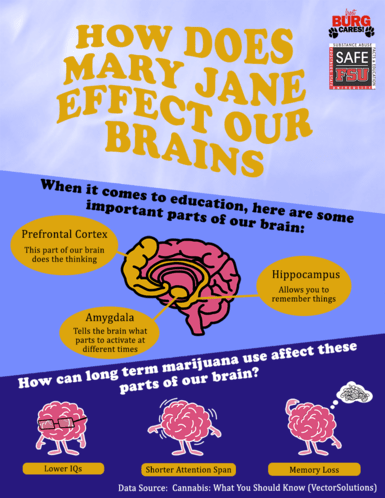
Cannabis use can also impact your health in many ways. From short-term effects like impaired memory and concentration, to long-term risks such as addiction and lung damage, it's essential to understand the potential health consequences associated with cannabis use. It is crucial to educate yourself on the potential risks to make informed decisions about your health.
- altered senses (for example, seeing brighter colors)
- altered sense of time
- Sleep disruptions, impaired memory, and sleepiness
- changes in mood
- impaired body movement
- difficulty with thinking and problem-solving
- impaired memory
- hallucinations, delusions, & psychosis (regular use of high-potency marijuana when taken in high doses)
- breathing problems
- increased heart rate
- severe nausea and vomiting (long-term use)
- temporary hallucinations
- temporary paranoia
- worsening symptoms in patients with schizophrenia—a severe mental disorder with symptoms such as hallucinations, paranoia, and disorganized thinking
( National Institute on Drug Abuse & American Psychological Association, 2022)
Cannabis T-Break Guide
Looking for support? Whether it is for your long-term health, finances, or you simply want to cut back on your personal cannabis use, this guide can be a helpful tool. A special thanks to our colleague Tom Fontana at UVM for creating this guide and generously allowing us access to it.

Faculty/Staff
As a faculty member, you play an important role. Students look to you for academic advising, mentoring and educating them to become productive and successful.
Unfortunately, cannabis misuse can interfere with your hard work and student learning. Having regular contact with students positions you to become a potential lifesaver. Early intervention can achieve multiple goals that creates a “win-win” for faculty, students and the university.
Early Intervention Advantage
- Prevents student drug use from becoming dependent
- Improves the overall learning environment
- Supports students that may be expressing other mental health issues
- Increase retention and graduation rates
- Sends a positive and caring message to other classmates
- Increases a student's G.P.A. and class attendance
- Supports the University's strategic plan goal of student well-being
Faculty Contributions
- Share your research expertise to help strengthen prevention, data, information, events, etc…
- Consider joining task forces, coalitions or committees that address drug use/misuse and/or health promotion/well-being - Frostburg Community Coalition
- Know where to refer students (SAFE Office & Student Counseling Center)
- Students typically over-estimate the amount of drug use on campus. The SAFE Office can provide faculty and staff members with current data (MD-CAS 2026) to help correct student misperceptions
- Infuse social norms data into your academic curriculum (i.e., Speeches, debates, research, case study scenarios, alcohol metabolism, laws/legal issues, writings/readings)
- Implementation of prevention efforts leads to a healthy campus culture and supports student success and well-being
Distress Signs
- Missed classes/assignments
- Failing
- Mood swings, irritable, hyperactive
- Weight loss/gain
- Heightened anxiety
- Falling asleep in class
- Lack of energy/motivation
- Disruptive/aggressive
- Changes in hygiene
- Impaired speech
- Confused thoughts
- Decreased motivation to pursue academic goals
- Lack of focus
- Bloodshot eyes
- Lack of coordination
- Slow movement/walking
- Loss of interest
- Disregard for authority/policies

Parents
- Talk to your student about cannabis prior to college
- Avoid mixed messages regarding cannabis use
- Establish goals and expectations and remind them of potential consequences
- Stay engaged with your student, even from a distance
- Remind them of your disapproval of cannabis
- Reward their positive choices
- Take an interest in their friends, groups/activities
- Parents are notified if your student encounters issues with cannabis
Check out our additional Resources for FSU Parents

Assessment
Thanks for checking out our resource page. We consider you to be one of the most powerful partners in lowering risk factors and increasing protective factors with your students. Academic success, safety and well-being are the top priorities of our department. If you have any questions about our initiatives, check out our website or contact us. ( FSU SAFE website; Email the SAFE Office )
Resources
 Addiction to Marijuana (Cannabis Use Disorder)



Frequently Asked Questions
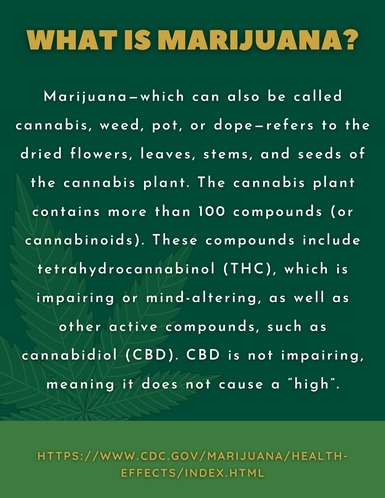
A cannabinoid; Marijuana refers to the dried leaves, flowers, stems, and seeds from the Cannabis sativa or Cannabis indica plant. Extracts can be made into hash oil or wax and contain the mind-altering chemical THC along with over 400 other chemicals.
Common slang terms include Aunt Mary, BC Buds, Boom, Chronic, Dope, Gangster, Ganja, Hash, Herb, Hydro, Indo, Joint, Kif, Mary Jane, Mota, Pot, Reefer, Sinsemilla, Skunk, Smoke, Weed, and Yerb.
Some chemicals in marijuana, like THC and CBD, have approved medical uses. The FDA has approved THC-based medications for chemotherapy-related nausea and appetite loss in AIDS patients, and CBD-based medication for rare forms of epilepsy. Research is ongoing.
Marijuana can be smoked in joints, pipes, or bongs; consumed in edibles or teas; vaped; or used in concentrates. Dabbing THC-rich resins is another method, though it can be risky.
THC binds to cannabinoid receptors in the brain, affecting pleasure, memory, thinking, concentration, movement, coordination, appetite, and perception. Effects usually last 1–3 hours when smoked, longer if ingested.
Marijuana is a Schedule I controlled substance under federal law. Even when states legalize its use, the federal government considers distribution and possession illegal. DOJ guidance provides details on enforcement priorities.
Marijuana is a Schedule I drug, meaning it is considered to have a high potential for abuse and no accepted medical use under federal law.
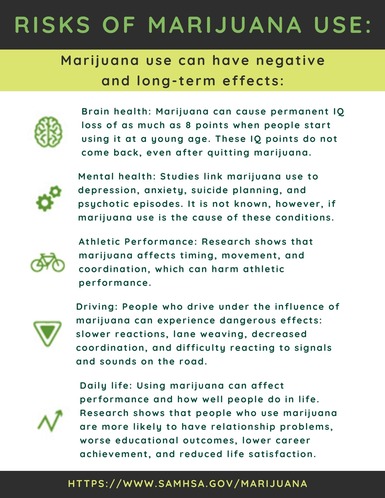
Legalization does not mean marijuana is safe. Heavy or early use can affect memory, attention, learning, mental health, cardiovascular and respiratory health, and may lead to addiction. Risks vary by method of use and potency.
No. Marijuana can impair memory, coordination, learning, and decision-making. Chronic use may increase risk of schizophrenia, lower IQ in adolescents, and heart or respiratory problems. It is the most commonly used illicit drug in the U.S. and has documented health risks.
Memory problems, difficulty processing information, poor sensory and time perception, and impaired concentration and coordination.
Difficulties with complex tasks (like driving), learning new skills, staying alert, recalling information, and making decisions.
Increased heart rate, lung damage, potential links to cancer (head, neck, testicular), impaired immune system, and interference with prescribed medications.
Factors include previous drug experience, biology, method of use, and potency of the product.
Modern cannabis is selectively bred for higher THC content, often using only flower buds rather than stems and leaves. Homegrown crops are fresher and more potent than imported marijuana of the 1970s.
Dispensary products often list THC/CBD content. Experts recommend starting low (≤2.5 mg THC) and increasing slowly to gauge effects.
Historically, Indica was considered relaxing and Sativa energizing. Today, most products are hybrids, and effects cannot reliably be determined by appearance.
Potency affects how strongly THC impacts the body. It has increased steadily over decades due to market demand and selective breeding.
Most users do not progress to harder drugs, though early exposure may increase susceptibility due to biological and social factors.
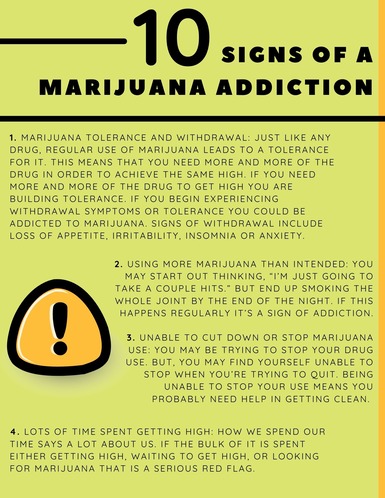
Signs include using more than intended, inability to quit, spending lots of time using, cravings, use despite problems, and withdrawal symptoms when stopping.
Behavioral therapies (motivational enhancement, cognitive behavioral therapy, incentives) are available. No FDA-approved medications yet, though research is ongoing.
Early use, especially with high-potency marijuana, is linked to higher rates of addiction.
Yes, students cited for illegal drug use/possession may risk losing financial aid or federal student loans.
Mixing substances increases impairment and health risks. Marijuana may also affect the efficacy of prescription drugs. Consult a doctor before combining substances.
Research has not shown a direct increase in lung cancer risk from marijuana alone, but smoking can irritate lungs and cause breathing problems. Combined use with tobacco increases risks.
Yes. Symptoms may include irritability, sleep problems, anxiety, decreased appetite, and physical discomfort. They usually peak within a few days and resolve within 2 weeks.
Illegal outdoor cultivation can damage ecosystems, water sources, and wildlife. It often involves pesticides, deforestation, wildfires, and expensive land restoration costs.
Note: An asterisk (*) indicates archived PDFs, which may have limited accessibility.
× ❮ ![Expanded Poster View]() ❯
❯
↑ Back To Top